
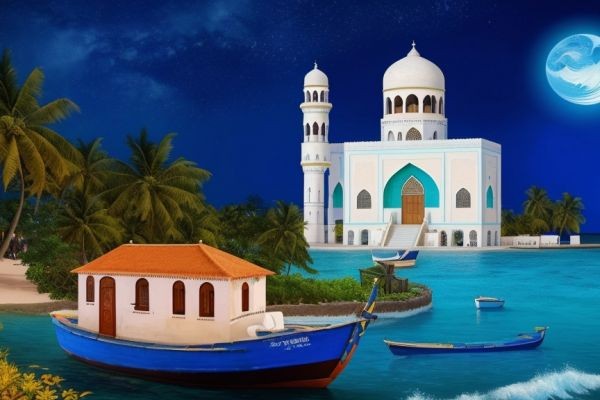
Lakshadweep: A Gem in India's Maritime Strategy
Lakshadweep, an archipelago of 36 islands, holds significant strategic importance for India. Beyond its breathtaking beauty and rich biodiversity, the islands serve as a critical component of India's maritime security and economic ambitions. PM Modi's visit underscored India's commitment to bolstering infrastructure, enhancing connectivity, and fostering sustainable development in this region.
The Maldives Factor: Muizzu's Controversial Statement
While PM Modi's tour was primarily aimed at inaugurating key infrastructure projects and engaging with the local communities, it inadvertently stirred the geopolitical waters. Enter Muizzu, a prominent figure from the Maldivian political landscape, whose remarks sent shockwaves across diplomatic corridors.
Muizzu's statement, although unexpected, resonated with underlying concerns about regional dynamics, maritime boundaries, and strategic alignments. His perspective shed light on the nuanced challenges faced by smaller nations in navigating the complex geopolitical landscape dominated by larger powers.
Interpreting Muizzu's Remarks: Beyond Surface-Level Analysis
To comprehend Muizzu's stance fully, it's imperative to dissect the underlying factors that influenced his statement. While the surface narrative paints a picture of contention, a deeper analysis reveals a confluence of historical, economic, and strategic considerations.
Firstly, the Maldives, despite its small size, occupies a pivotal position in the Indian Ocean Region (IOR). Its proximity to major sea lanes, natural resources, and geopolitical significance necessitates a nuanced approach to foreign policy. Muizzu's remarks, therefore, should be viewed within this broader context, where national interests intersect with regional dynamics.
Secondly, the evolving geopolitical landscape, characterized by increasing competition among major powers, has compelled smaller nations like the Maldives to recalibrate their strategic alignments. Muizzu's statement, in this regard, can be interpreted as a strategic maneuver aimed at balancing competing interests while safeguarding the Maldives' sovereignty and autonomy.
Navigating Diplomatic Waters: India's Response and Way Forward
In the aftermath of Muizzu's controversial statement, India's diplomatic machinery went into overdrive, emphasizing the longstanding ties, mutual interests, and shared objectives that bind the two nations. Recognizing the importance of preserving stability in the region, both countries engaged in constructive dialogue to address concerns and reaffirm their commitment to fostering bilateral cooperation.
Moving forward, PM Modi's tour of Lakshadweep serves as a catalyst for deeper engagement, collaboration, and mutual understanding between India and the Maldives. By prioritizing dialogue, diplomacy, and development, both nations can navigate the complexities of the modern geopolitical landscape and forge a path towards shared prosperity.
Conclusion: A Tapestry of Geopolitical Intricacies
In conclusion, PM Modi's tour of Lakshadweep and Muizzu's unexpected reaction epitomize the intricate web of geopolitics, diplomacy, and strategic considerations that define the Indian Ocean Region. While the surface narratives may oscillate between contention and collaboration, a nuanced understanding reveals a tapestry of interconnected interests, aspirations, and challenges.
As stakeholders navigate these complexities, it's imperative to prioritize dialogue, cooperation, and mutual respect. By doing so, nations can transcend transient disagreements and forge enduring partnerships that contribute to stability, prosperity, and peace in the region.